
- SALONGA, PRINCESS LORELAI C.
- December 9, 2024
An early preparation: BFP conducts fire drill on VHA in December
By Alexis D. Dela Cruz
March is the designated fire prevention month but Vallenians are ready even before March 2025 because the VHA fire drill event took place on December 6, 2024.
“Ang fire drill ay nag-uumpisa tuwing March, every fire prevention month pero whole year kasi yun. Once na may magrequest gina-grant namin siya, nagre-respond kami na magconduct,” F01 Jomel Arenas said. He is a 27 years old firefighter that serves for four years now.
Conducting fire drills is just one of their responsibilities in the community. They respond during fires, they launch projects, and inspect.
“Meron kaming community relation unit. Ang purpose nun [ay] nakikipag-coordinate kami sa mga barangay. Meron kasi kaming program, ang BFP, na Oplan Ligtas sa Pamayanan kung saan involved doon ang mga high-risk na barangay. Halimbawa, isa sa high-risk na barangay ay yung mga dikit dikit ang bahay, pinupuntahan namin siya tapos nagco-conduct kami ng house to house survey at intensive lecture. Nagco-conduct kami ng fire drill para in case magkaroon ng sunog, alam nila yung gagawin nila,” Arenas stated.
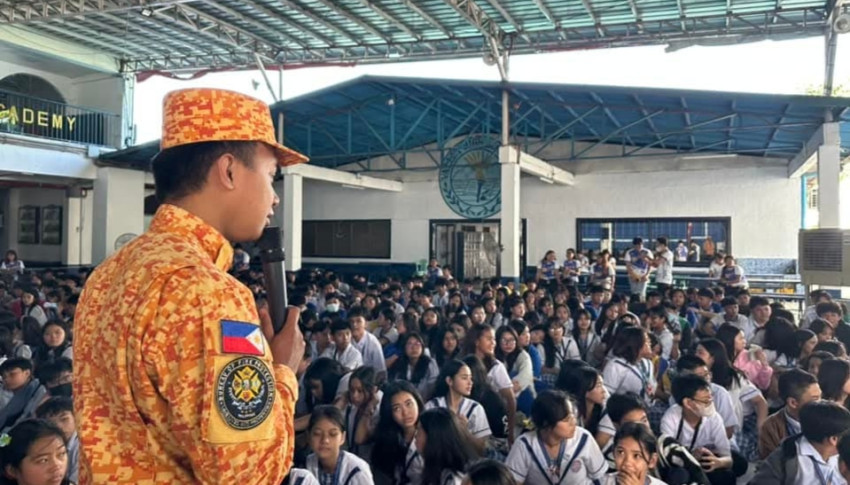
The Bureau of Fire Protection (BFP) conducted a fire drill event in Valley High Academy Inc. (VHA) which aims to teach the students the causes of fire, proper handling of fire extinguishers, and how to respond during fire.
The participants are all students from elementary to junior high school. In SHS, there are 10 representatives per section.
The orientation started with an introductory message presented by Daniela Nicolas, a teacher from senior high school department.
The speaker is an electrical inspector of businesses and buildings such as Jollibee, Chowking, FEU Roosevelt, Yamaha, and VHA. He is FO1 Gilbert Estrellado, serving for four years as a firefighter.
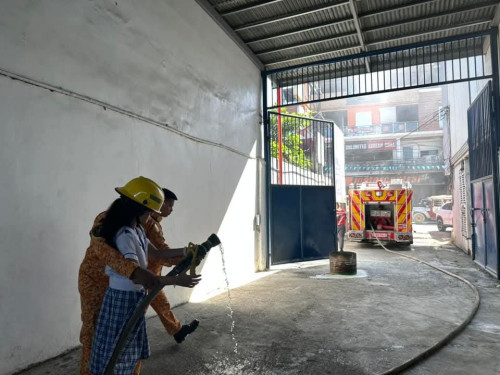
After the seminar, applications are taught to students by presenting how to use the fire extinguisher and fire hose properly. There are 18 students and 2 teachers who were chosen to experience killing fire.
Three of the students are Raplh Drostan Y. Montemayor from 6 Hyacinth, Leona Heather Rocillosa from 7 Curie, and Rosalino Medalla III from 11 HUMSS A. The two teachers are Jenny Rose Jaromay from SHS deartment and Je Ann Gutierrez from Elementary department.
“Kailangan natin ng fire extinguisher para sa kaligtasan,” Montemayor said.
“Important siya since it's very unpredictable kung kailan magkakasunog,” Rocillosa said.
“Hinahanda nila tayo sa posibilidad. Halimbawa nagkaroon ng sunog, pinapakita nila yung proper way na pagpatay ng apoy,” Medalla III said.
“Ramdam mo yung feedback ng tubig tsaka hindi siya basta basta hose lang kasi grabe yung pressure na nalalabas nung hose,” Medalla III shared his experience on handling fire hose.
LEARN MORE
"Ang unang hindi dapat gawin ay magpanic dahil mawawala lahat ng natutunan niyo," FO1 Estrellado said.
Panicking triggers fight or flight response, which further triggers an instinctive state of mind. The body will do what it thinks is correct instead of what it's been trained to do. This can lead to making the wrong decision in the heat of the moment.
"Pangalawang dapat gawin, tell everyone about the fire. Sabihin niyo sa parents niyo, kaklase, sa mga teachers," FO1 Estrellado added.
As time is one of the most important factors in an emergency, alerting others to a fire as quickly as possible can prevent casualties by allowing fire prevention services to respond in a shorter amount of time.
Quickly notifying properly trained individuals can make a difference when it comes to rescuing any possible casualties and allow for the fire to be controlled immediately.
According to FO1 Estrellado, fire is beneficial with its different use.
“Pero kapag napabayaan natin yung apoy, pwede talaga itong maging sanhi ng sunog,” he said.
Leaving flames unattended can easily cause a sequence of events that can lead to a fire breaking out and being uncontrollable. According to the Canadian Red Cross “In as little as 30 seconds, a small flame can grow into a dangerous fire."
As reliance on technology increases, electricity consumption increases along with it. As long as electricity is being consumed, there is always a risk of starting an electrical fire.
The appliances that carry the biggest risks are the high voltage appliances such as washing machines, freezers, electric stoves, aircons, and irons.
Candles are one of the most likely culprits when a fire breaks out due to it being an open flame.
“Sobrang bihira lang tayo gumamit ng kandila pero may mga cases ng sunog dahil sa kandila,” FO1 Estrallado stated.
Fires caused by candles are most common in places without electricity or in squatter areas since houses are often made from wood and have very little fireproofing.
In order to respond and avoid huge fires, students should be knowledgeable about fire extinguishers.
There are two types of fire extinguisher; red and blue. The blue-colored extinguisher is water based wherein it cannot be used on electrical fires.
In terms of classes, there are classes A, B, and C.
Class A fire extinguishers are used to fight regular combustible materials such as wood, paper, cloth, and tarp. They use regular water to fight these fires.
Class B fire extinguishers are used to fight liquid gas, alcohol, and fuel fires. They use dry chemical powders such as CO2 or foam to smother the flames out.
Class C fire extinguishers used to fight electrical fires. It contains CO2 or foam to suppress fires.
When fighting a fire, it is imperative to know how to use a fire extinguisher properly. In handling this, the PASS method should be practiced and applied (Pull, Aim, Squeeze, and Sweep) to ensure safety.
— Princess Lorelai C. Salonga