
- SALONGA, PRINCESS LORELAI C.
- December 9, 2024
[OPINION] South Korean people are in control
By Bea Amaili E. Parajillo
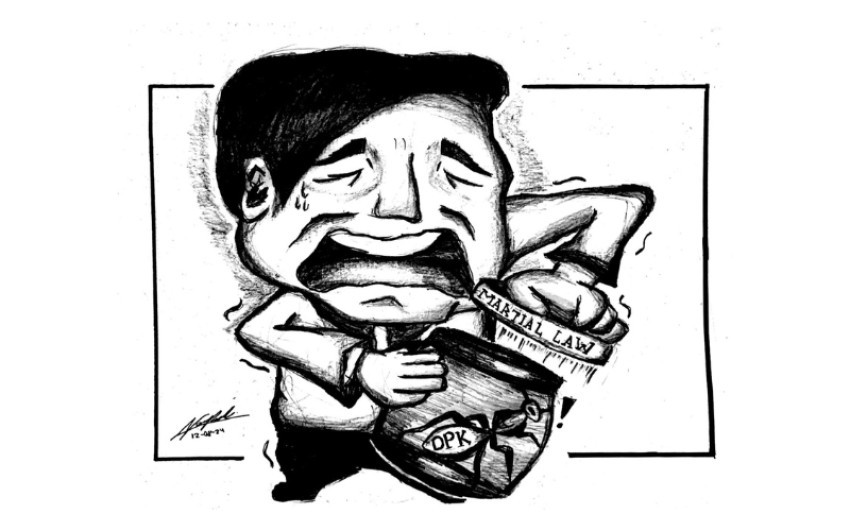
Art by Nathanielle Rodrigo E. Rosello
History of South Korea with martial law is closely tied to its struggles for democracy throughout the 20th century.
Martial law was frequently imposed during periods of political turmoil, notably under military regimes in the 1960 to 1980s. These periods often involved crackdowns on dissent, restrictions on press freedoms, and violent suppression of pro-democracy movements.
On December 3, 2024, South Korean President Yoon Suk Yeol declared martial law in a controversial, late-night announcement. He defended this move by citing threats from North Korean communist forces and anti-state forces undermining the freedom and happiness of the Korean people.
Martial law went into effect immediately: banning political gatherings and placing news organizations under military control.
Protests erupted outside the National Assembly with citizens and lawmakers (including members of Yoon’s own conservative party) opposing the decision.
However, unlike previous authoritarian-era martial laws, this move was rapidly overturned by parliament and met with widespread public resistance. This incident highlights the strength of South Korea’s democratic institutions and the public's civic awareness.
Lawmakers convened an emergency session and unanimously voted to overturn the martial law, calling it unconstitutional. With all odds against him, President Yoon had no choice but to relent. By the early hours of December 4, 2024, he withdrew the military forces.
“I think that young people all the way up to people in their 40s will [have been] shocked, since they have grown up in a democracy,” Ramon Pacheco Pardo said in an interview by the New Statesman. He is a professor at King’s College London and an author in South Korea.
Decision of President Yoon to impose martial law not only shocked the South Korean people but also put his political future in jeopardy.
His approval rating plummeted and this desperate move seemed like an attempt to silence political opponents and stifle freedoms.
Instead of uniting the country, this authoritarian measure sparked outrage and calls for his impeachment with accusations of treason being filed against him. Taking away citizens' freedoms is a step backward, especially in a society that has fought so hard for its democratic rights.
If South Korea’s past dictators couldn’t hold back the people's will, what made President Yoon think he could? The answer is simple—he can’t.
His actions have only fueled more resistance and pushed him closer to losing power or worse possibly facing jail time. On the edge of 2025, we cannot allow any leader to erode the very foundations that have made our society stronger.
Authoritarian measures are outdated and harmful in democratic societies. The world has witnessed time and how such actions breed resentment, division, and instability.
Democracy is about empowering the people, not taking away their voices.
Citizens must remain vigilant against these threats, because if we do not protect our democracy, we risk losing the very freedoms that define our society.
It’s crucial to stand firm in our commitment to democracy, ensuring that no leader can undermine the rights and freedoms of the people. Holding leaders accountable for their actions is key to preserving a society that values justice, equality, and freedom for all.
The fight to protect democracy is ongoing and people must continue to stand up for it, now more than ever.
Sources:
https://www.newstatesman.com/international-politics/2024/12/south-korea-martial-law-return